
Residents have raised questions about the rise in property taxes over the past 15 years, while focusing on how Cooper City’s services are funded and how property tax revenues are used to support those City services.
To help provide important context, the City has created a series of informational graphics that explain the revenue sources used to fund City services. The data shows how the City utilizes multiple revenue sources to fund its top investment, police and fire services, while also working to balance other high service levels with affordability.
Property Tax Revenue Has Increased
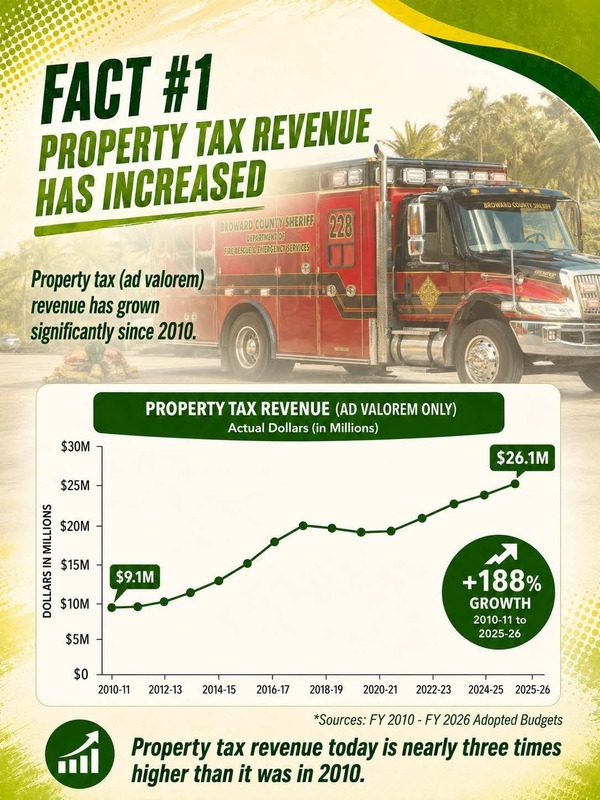
Since 2010, property tax (ad valorem) revenue has increased significantly. In Fiscal Year 2010-11, Cooper City collected approximately $9.1 million in property tax revenue. For Fiscal Year 2025-26, that amount has grown to approximately $26.1 million.
This represents an increase of approximately 188 percent over the past 15 years.
This growth reflects increases in taxable property values throughout the community and has provided additional resources to help support City services.
Public Safety Costs Have Also Increased
At the same time, the cost of providing high-quality police and fire services has also risen significantly.
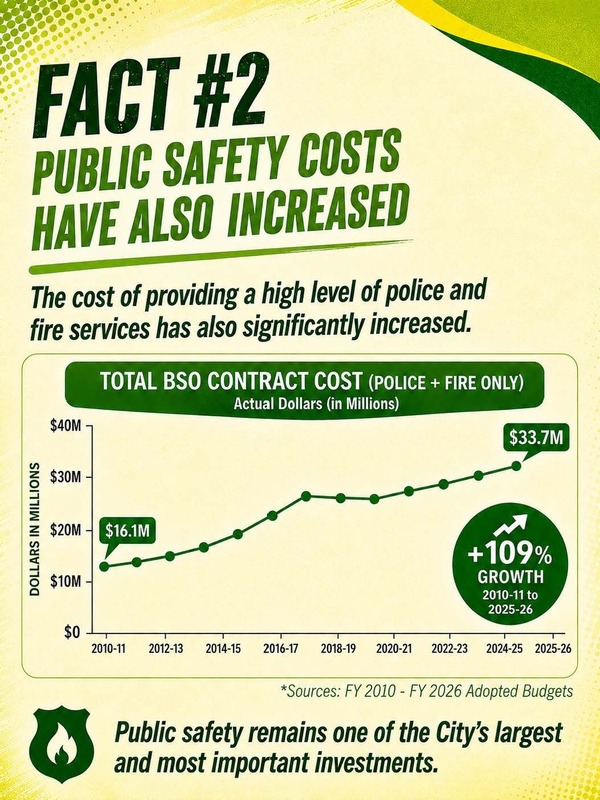
In Fiscal Year 2010-11, Cooper City's contract for police and fire services totaled approximately $16.1 million. For Fiscal Year 2025-26, that cost has increased to approximately $33.7 million.
This represents an increase of approximately 109 percent.
Public safety remains one of the City's largest and most important investments. Residents consistently identify police and fire services as a top priority, and maintaining high service levels requires substantial resources.
Balancing Service Levels and Affordability
As costs have increased, the City Commission has continued to focus on balancing service delivery with affordability.
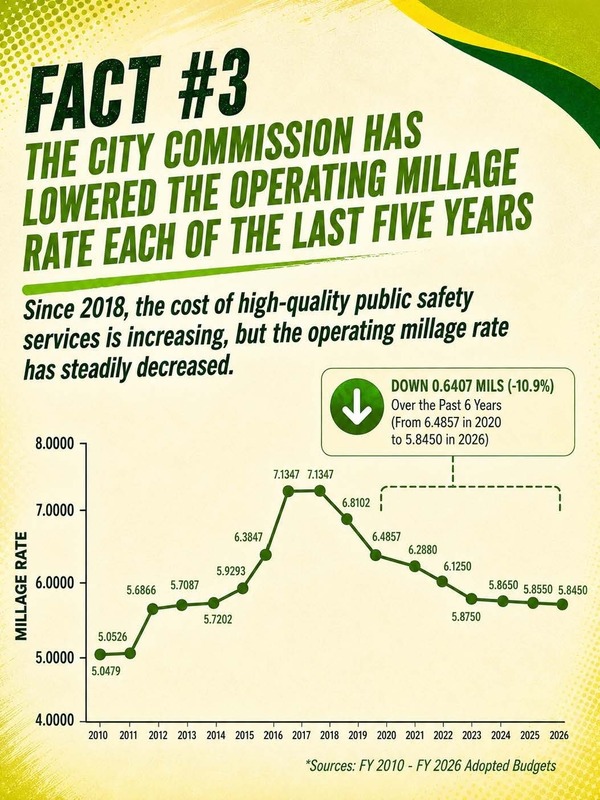
While the cost of public safety services has risen substantially over the past 15 years, the City Commission has reduced the operating millage rate during each of the last five fiscal years.
The operating millage rate has decreased from 6.4857 mills in Fiscal Year 2020 to 5.8450 mills in Fiscal Year 2026, representing a reduction of approximately 10.9 percent.
This reflects an ongoing commitment to providing high-quality services while being mindful of the impact on taxpayers.
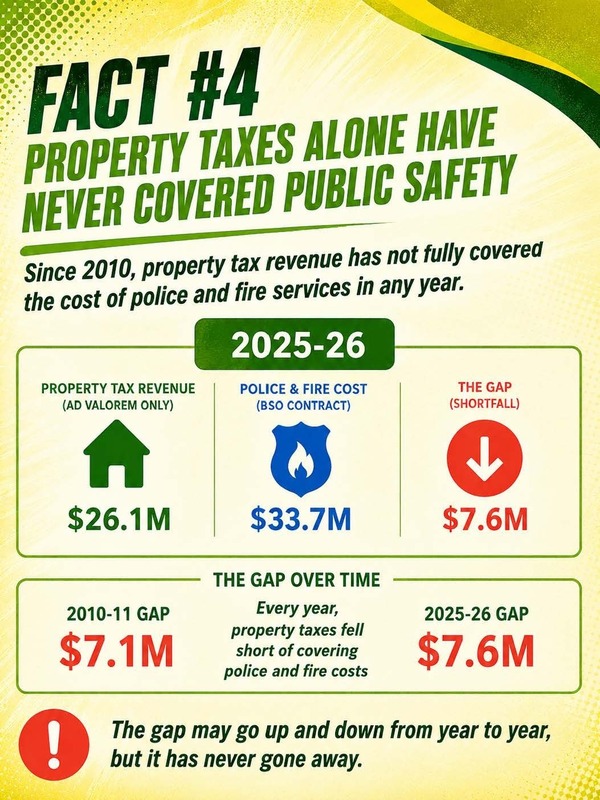
Property Taxes Alone Have Not Covered Public Safety Costs
While property tax revenues have increased over time, they have not fully covered the cost of police and fire services in any year since 2010.
For Fiscal Year 2025-26:
Property Tax Revenue: $26.1 million
Police and Fire Services Cost: $33.7 million
Difference (Shortfall): $7.6 million
A similar gap existed in Fiscal Year 2010-11, when public safety costs exceeded property tax revenues by approximately $7.1 million.
This means that property taxes are an important source of revenue, but they are not the sole source of funding used to support public safety services.
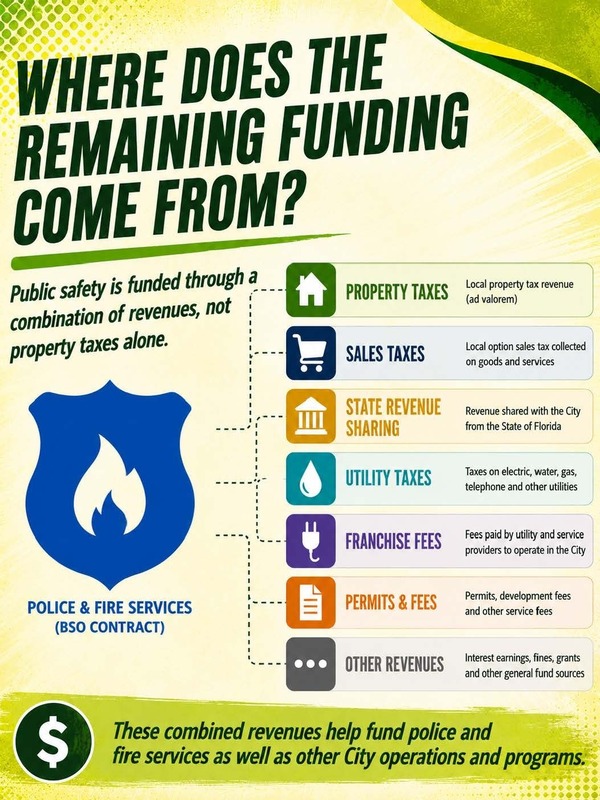
How Is The Difference Funded?
Like most local governments, Cooper City relies on multiple revenue sources to fund public services.
For Fiscal Year 2025-26, the City's General Fund revenue sources include:
Property Taxes – 52%
Charges for Services – 19%
Revenue Sharing and Sales Taxes – 14%
Intergovernmental Revenues – 9%
Other Revenues – 6%
These revenue sources work together to support police and fire services, while also helping fund parks, recreation programs, roads and infrastructure, technology services, facility maintenance, and other essential City operations.
Without these additional revenue sources, the City would not be able to maintain the level of services residents expect.
The Bottom Line
The City's finances are built on a combination of revenue sources working together to support essential services.
The numbers show:
Property tax revenue has increased.
Public safety costs have also increased.
Property taxes alone have not covered police and fire services since 2010.
Multiple revenue sources help fund public safety and other City operations.
The City Commission has reduced the operating millage rate during each of the last five years while continuing to maintain high-quality services.
Each year, the City adopts a balanced budget designed to meet the needs of residents while remaining committed to fiscal responsibility, transparency, and providing the highest level of service at the lowest possible cost.