
A familiar neighborhood route can look different depending on how you travel it. For a driver, it may be the daily trip to work. For a child riding a bicycle to school or a family walking to a park, that same roadway can present different challenges.
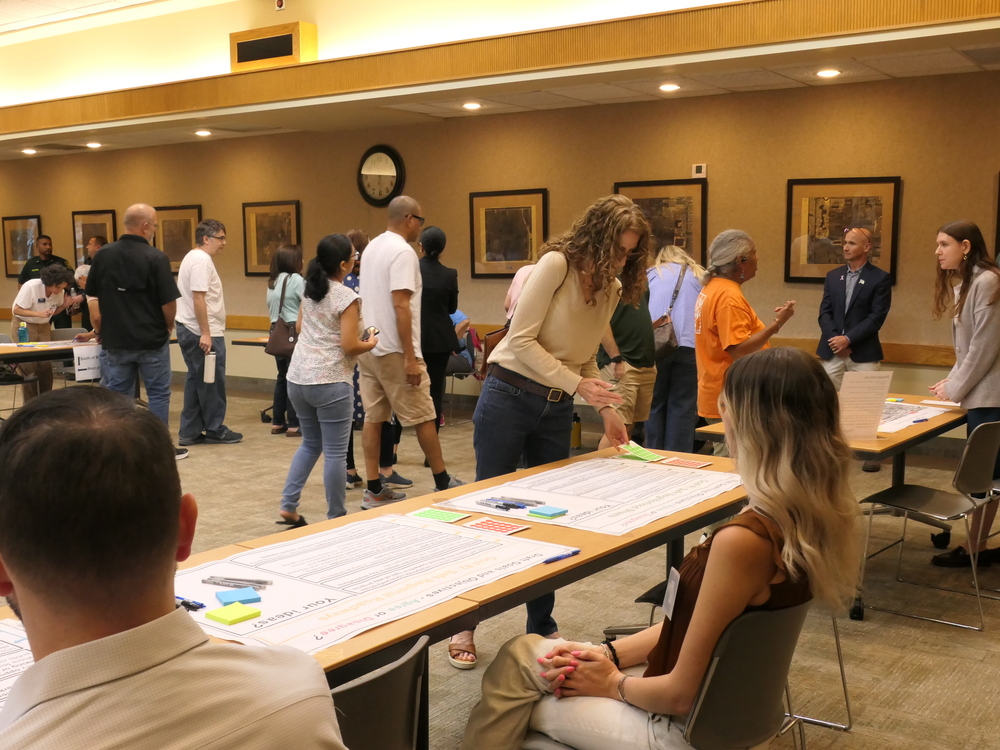
Those everyday experiences were at the center of Cooper City’s first Transportation Master Plan Community Meeting, held October 20, 2026, at City Hall. Residents joined the City and the Broward Metropolitan Planning Organization (MPO) to share concerns, consider priorities, and help shape a plan for safer travel throughout the community.
The meeting began with a short presentation introducing the project and its purpose: identifying community-driven, design-ready transportation projects for up to six public roadways. The recommendations will draw on best practices for safety, speed management, and complete streets—an approach that considers the needs of everyone using a roadway, including drivers, pedestrians, bicyclists, scooter riders, and transit users.
The plan focuses specifically on public roadways. Private streets are outside the project’s scope.
Following the presentation, the meeting shifted from learning about the project to helping shape it. Residents visited tables focused on different sections of the City, reviewed materials, and offered comments and suggestions about making roadways safer for all users.
Questions at the tables encouraged participants to connect the planning process to their daily lives: Where would you like to walk or bike? Do you feel comfortable crossing major roads? Do people speed in your neighborhood? What improvements would make you more comfortable allowing your children to walk or bicycle to school?
Residents were also invited to indicate whether they agreed or disagreed with proposed goals and objectives, identify their transportation priorities, and consider what they would change if they were “Mayor for the Day.”
The discussions explored three proposed goals: safe neighborhood streets, safe regional roadways, and safe student mobility. Objectives included improving connections to parks and other destinations, addressing gaps in walking and bicycling routes, improving crossings, managing vehicle speeds, and reducing conflicts between drivers and students walking, bicycling, or riding scooters.
By asking residents to consider both specific locations and broader priorities, the meeting created an opportunity to connect firsthand experiences with the work of transportation planning. That input will help inform the selection of roadways and the development of recommendations.
Potential improvements outlined in the presentation included shared-use paths, dedicated bicycle facilities, improved crosswalks, speed tables, street lighting, and intersection safety features. These are examples of strategies the planning process may consider; the meeting did not establish a final list of projects.
Based upon the Community Meeting and survey responses, City staff is scheduled to select up to six public roadways for further study in December 2026. The project team will then develop potential solutions and recommendations, with continued opportunities for public input.
The Transportation Master Plan does not provide or designate construction funding. Instead, it is intended to prepare recommendations with the information needed to help the City pursue grant funding. Funding for design and construction will need to be identified as projects move forward.
There is still time to help shape the plan. Residents who could not attend the meeting, and those who have more to share, can provide feedback through the online survey:
Complete the Cooper City Transportation Survey
Whether your concern involves a neighborhood crossing, a route to school, or a connection to a nearby park, your experience can help guide the next steps toward safer, more connected public roadways in Cooper City.